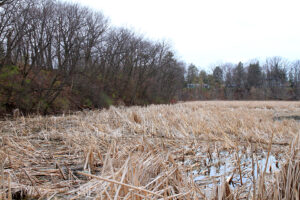
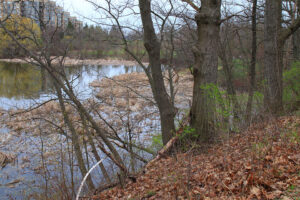
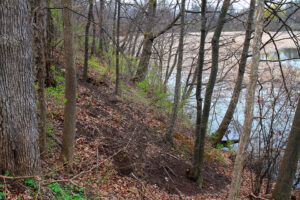
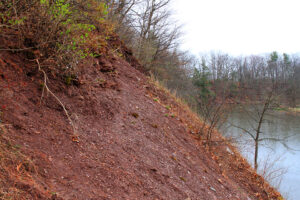
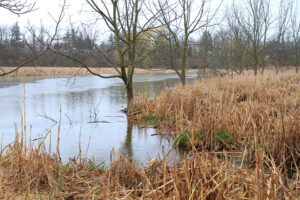
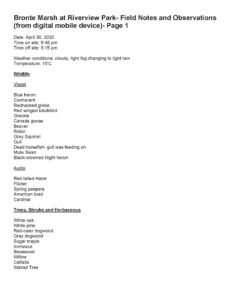
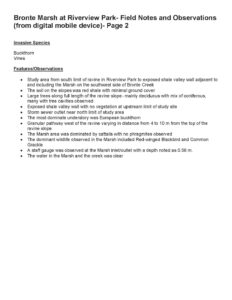
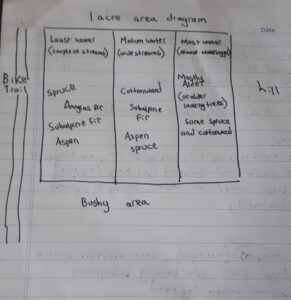
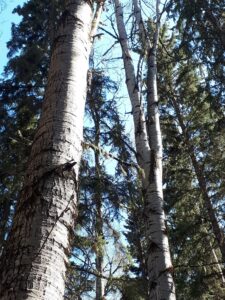
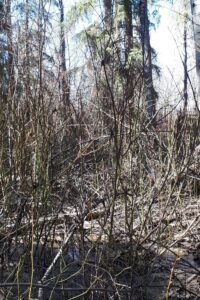
Initially, while studying patterns in my chosen area along a riparian zone, tress had not leafed out yet, shrubs and flowers were also not in bloom. My notes consisted of observations on biodiversity (mostly avifauna), soil type and various ecotypes along the river. I noticed that ant hills were present throughout the area, but they were not consistent within each zone. At first, my observations did not show any patterns, but then more questioning on biotic and abiotic relationships further developed my research topic.
Upon further investigation, I have decided to study the presence/absence of ants in a riparian zone where vegetation, soil type and moisture changes throughout the elevation gradient situated on the north shore of the Highwood river. The locations which I will continue to collect data from will include the river’s flood zone, a mixed grass plane with old cottonwood trees and a section of the south facing bank towards the uplands. While each location has a distinct landscape, I will also add a fourth section near vernal wetlands, located north-east from the river just below a steep bank, to add variety in soil type, moisture and vegetation cover.
Known species:
Western Thatcher Ant (Formica obscuripes) (see photo attached)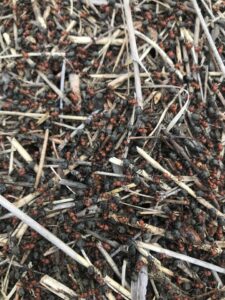
Hypothesis and prediction
Soil type, moisture and vegetation cover influences ant habitat preference. I predict that there will be more ant occurrences along an environmental gradient in concurrence with exposed, dryer and sandier soils.
Response variable: Ant presence/absence (categorical)
Predictor variables: Soil type (categorical), Soil moisture, vegetation cover (continuous)